Back
FSGP 2025 Competition Reflection
Saman Niksiar
This is an excerpt from Saman's personal blog. Read the full post here.
Formula Sun Grand Prix 2025 was our second outing with Brightside, UBC Solar’s third-generation car (which also raced in FSGP and ASC 2024). Due to a series of challenges—detailed later in this reflection—we were only able to complete five laps on the track. The majority of these issues stemmed from mechanical and electrical integration and communication, as well as misinterpretations of observations. Throughout the past year, we focused on enhancing existing systems, assuming that the core functions were already dependable. Yet, once we hit competition, it was precisely those unmodified systems—the ones we believed needed no work—that let us down.
We tackled a vast range of problems—everything from minor glitches to major failures—in just a couple of days. The critical thing is we attacked each issue on the spot, with only the resources at hand, until it worked.
You don’t really know how something works until you break it.
And we broke plenty. Then, in scorching heat, crawling with bugs, and running on no sleep, we damn well figured out how to fix every one of them.
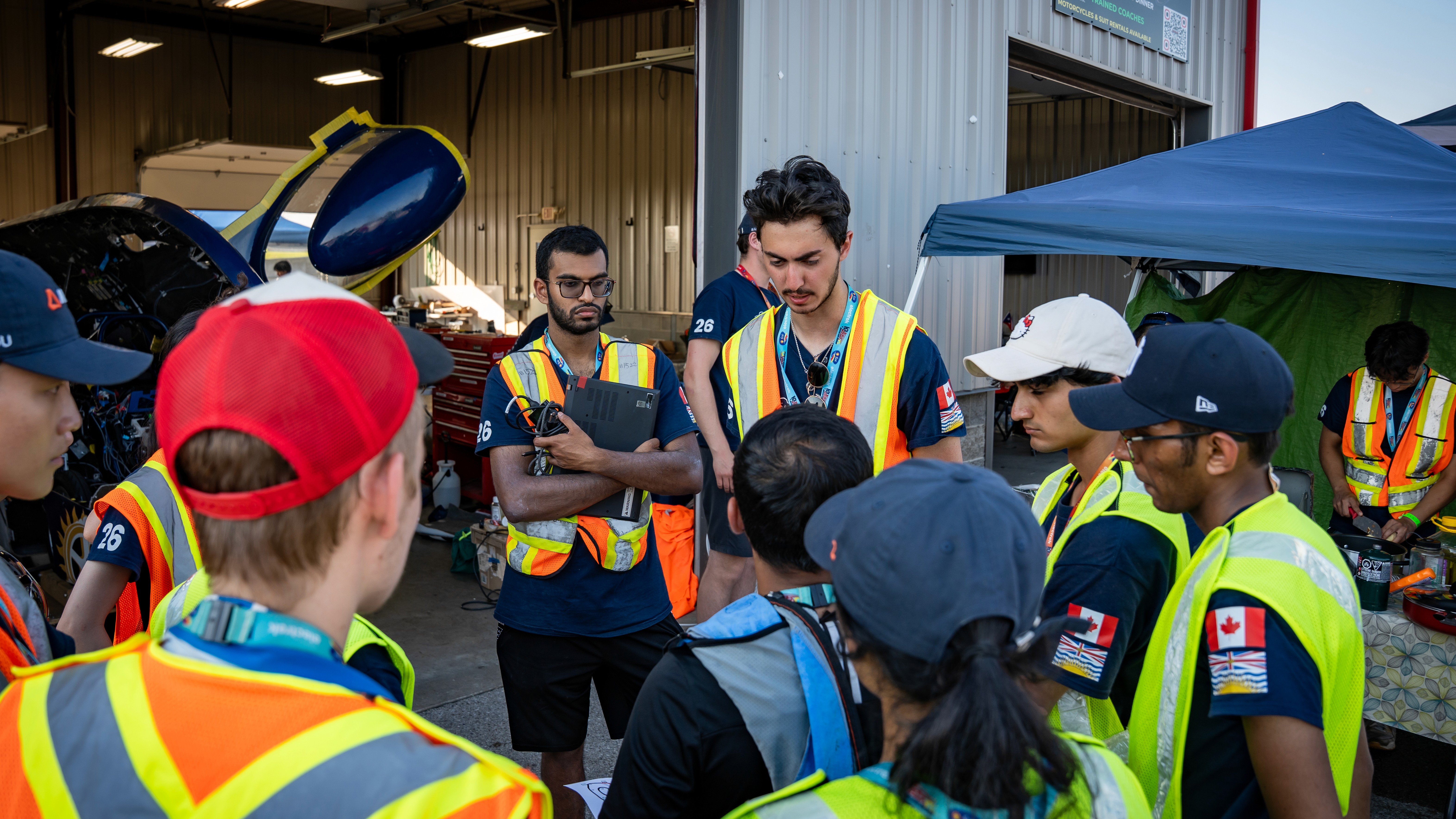
When we decided to stop the race, before letting myself get emotional about the result, I took a step back and really saw what we’d accomplished. Every member worked through sleepless nights—bringing creativity, patience, and passion to every challenge, brainstorming solutions, offering suggestions, and fixing every failure that came our way. The sheer volume of work over those few days was astonishing. I’ve never felt more like an engineer—more creative or more driven to solve problems. Funny enough, I didn’t have a drop of caffeine until day four (after that, things got out of hand), but our passion was the real fuel: a collective “we must fix this” echoed in our heads. These teammates will be with UBC Solar for years to come, and now they carry the confidence and skills to tackle anything. They understand every system because this was true team debugging—embedded folks crimped wires, BMS members tore down the motor, BTM helped probe phases. Everyone was hands-on, emotionally and physically invested. They’ll pass on that experience to new members—not just as theory, but as lived knowledge.
I want to give a massive shout-out to everyone who powered through those fixes and offered the insights that pulled us back from every dead end—especially the leads: Aarjav (who may never have slept), Michelle, Krish, and Prisha for their relentless hard work and unwavering presence through every late-night scramble. The “sleeping” thread on Slack—pictures of teammates passed out on chairs in stifling heat swarmed by moths—sums up just how far we pushed ourselves to get the car running. Seeing tens of pages on the the post-comp notes from other team chats, the reflection and scrutineering docs, and every member’s eagerness to record observations and suggestions convinces me that this crew is more capable than ever. With this level of hands-on debugging, informed decision-making, and collaborative spirit, I’m absolutely confident we’ll set a new standard when we tackle V4.
Furthermore, one of our biggest achievements this year was winning the Altair Challenge, earning a USD 10,000 prize that will directly support the design and manufacture of V4. Beyond the financial award, the Altair judges praised our entry as the best design by far—testament to our team’s talent and a sign of great things to come with V4 and beyond.
UBC S

LAR
manager@ubcsolar.com
©2026 UBC Solar. All rights reserved.